
Ozempic Face?
Everyone on social is seeing the new trending topic of “Ozempic face.” But in clinical practice, practitioners may also notice another categorical effect of this medication. So is there a possible upside to “Ozempic face”?

What is Ozempic Face?
“Ozempic face” is the pop‑culture nickname for when rapid weight loss from trendy diabetes/weight‑loss shots (GLP‑1s) leaves your once-plump, filtered-looking face suddenly gaunt, saggy, and a little bit Tim Burton chic.
What’s the nuance?
Clinicians are now also clocking a quieter trend: patients with naturally round, fuller faces often emerge from Ozempic not gaunt but gorgeously contoured, as if they’ve had a subtle buccal fat and jawline sculpt in one syringe-free swoop. In fact, many injectors report that some patients—especially younger or naturally fuller-faced ones—actually look better and more sculpted in the early phases of GLP‑1 weight loss, before they cross into visible deflation. There’s growing expert commentary that GLP‑1–related facial changes are highly phenotype‑dependent, with some patients experiencing flattering slimming and contouring while others develop the classic hollow, aged “Ozempic face.”
How GLP‑1s affect the face differently than diet and exercise
GLP‑1 (and GIP/GLP‑1) drugs change the face differently than “just” diet and exercise because they drive more rapid, medication‑mediated fat loss that can disproportionately deflate key superficial and deep fat pads—especially the medial and lateral cheek (malar) fat pads, buccal fat, preauricular fat, submalar fat, and submental fat. With roughly every 10 pounds lost, many clinicians report visible midface thinning and jawline sharpening, while losses of 20–30+ pounds are where you start to see more pronounced hollowing in the deep medial cheek, temples, and preauricular areas that read as classic “Ozempic face.”
In summary, GLP‑1 weight loss hits the face harder because it both directly changes how fat pads behave—shrinking and redistributing them in a way simple dieting doesn’t—and does it so quickly that skin and ligaments don’t have time to slowly adapt, so every pound shows more dramatically.
How do you know how your face will respond?
Face shape sets the stage for how GLP‑1s show up in your selfies. Round or “curved” faces (as wide as they are long, cheek‑dominant, soft jaw, rounded chin) usually see early weight loss carve in prettier cheekbones and a cleaner jawline. Angular or “elongated” faces (longer than wide, similar width at forehead/cheek/jaw, squarer or pointier chin) are the ones that tip more quickly into under‑eye hollowing, temple dip, and a sharper—sometimes harsher—jaw.
Age and starting weight then decide how forgiving that process is. Under 40 or starting from a higher BMI, you generally have enough skin elasticity and fat reserve that the first 10–20 pounds on a GLP‑1 read as “glow‑up contour.” Over 40 or beginning only slightly overweight, the same drug‑driven fat loss and skin laxity can fast‑track you into visible sagging and deflation, so you reach the “Ozempic face” zone at a lower pound‑loss threshold and need more careful planning around fillers and support.
Is Your Face Too Ozempic‑Slim?
How to Spot Over‑Deflation and Use Smart, Reversible Filler So You Don’t Look Overfull if the Weight Comes Back
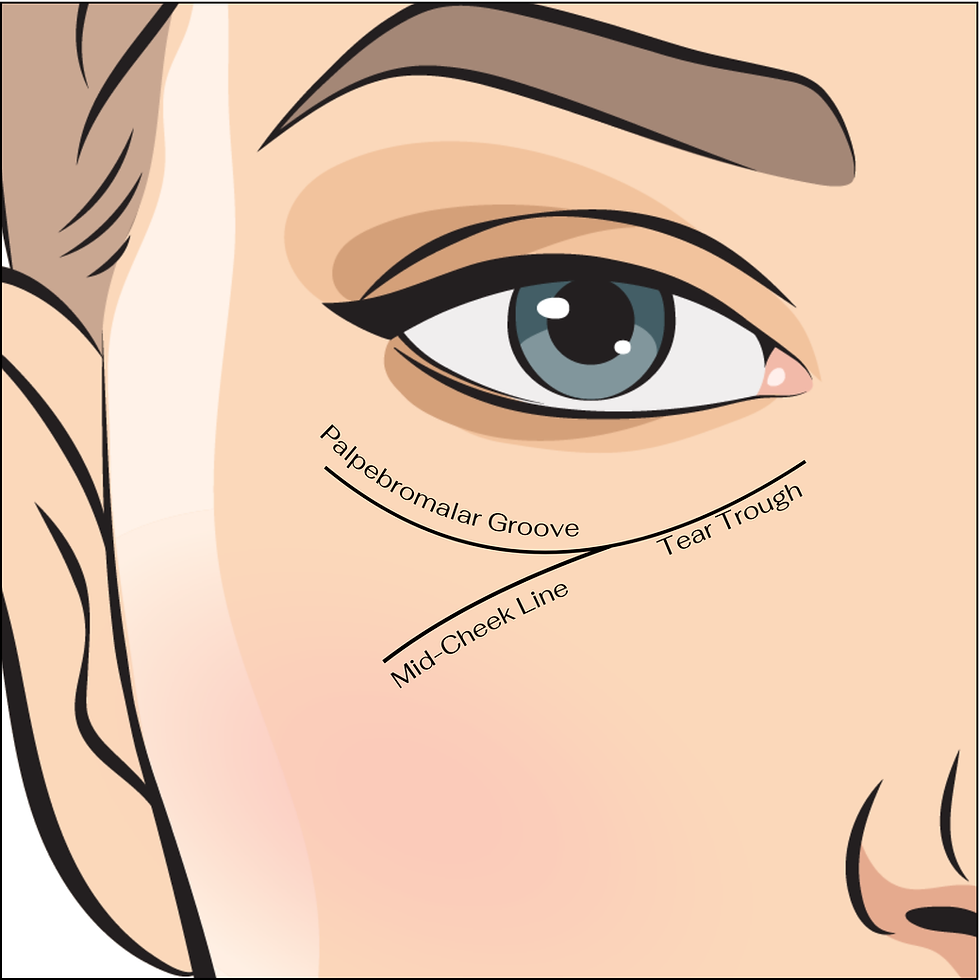
If you’ve ridden the GLP‑1 roller coaster and your face has gone from “snatched” to “skeletal,” there are some clear signs you’ve crossed into over‑deflated territory and smart ways to fix it without setting yourself up to look overstuffed if the weight comes back. Look for three red flags in the mirror or your selfies:
A sudden, sharp groove from the tear trough into the mid‑cheek that wasn’t there before.
A flattened, almost concave contour where your cheekbone used to softly round out.
Skin that seems to hang a bit over the nasolabial fold and along the jowl area, creating early marionette lines, even though your body is smaller than ever.

Once you’ve decided your face is truly over‑deflated, the goal with filler isn’t to “reinflate your old face,” but to rebuild the underlying scaffold with high, deep support along the lateral cheek and zygoma, a touch of anterior cheek projection, and tiny doses in the prejowl and chin to re‑tension the lower face—while deliberately avoiding heavy filler in the medial cheek and nasolabial fold, which are the first areas to look puffy if you regain weight.
Done well, this approach acts like a temporary framework: it restores light reflection, lifts shadows, and softens hollows while you’re at your leanest, but because the volumes are conservative and the product is placed structurally rather than as “filler for fullness,” your face is far less likely to tip into chipmunk territory if your GLP‑1 journey pauses or the scale inches back up.
It is possible to stay conservative with filler in the “weight‑sensitive” areas, especially when just treating the sides of the cheeks, smile lines, and prejowl isn’t enough to fix Ozempic face. If you already see a deep groove in the middle of your cheek, a flat or sunken area right under the eye, and hollow temples, treating only the outer cheek and folds will still leave you looking tired and deflated. Those are the situations where we talk about adding small, very targeted amounts in the mid‑cheek and temple area so your whole face looks balanced again, without making you look puffy if the scale later creeps up.


